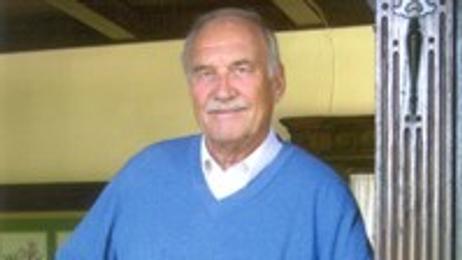
Joseph Gauld is a distinguished educator who founded Hyde Schools in 1966. He very kindly agreed to answer some questions about Hyde Schools and his educational philosophy. The Editor.
1. Tell us a bit about the crisis of conscience that you had back in 1966. This is how the concept of Hyde Schools was shaped, correct?
As a director of admissions who taught calculus and coached football in 1962, I had a crisis of conscience when I realized I was part of a competitive educational system valuing certain abilities that blocked the full development of the unique potential of students.
On the other side of the spectrum, there was another student in the same class who was the classic 鈥減lugger.鈥� Although he had considerable difficulty with the material, he embodied all of the qualities and virtues I hoped that schools would espouse: curiosity, strong work ethic, concern for others, honesty, etc. I praised his effort, yet ultimately鈥攁nd reluctantly鈥攇ave him the lowest grade in the class.
This example represented what was wrong with our educational system, which values achievement, ability, and talent (so much so that it simply rewards and stops challenging students who have it) over attitude, effort, and character. I could not serve either of these students in the system I served with a traditional grading system, so I founded Hyde School in 1966, where I knew I could guide every student鈥攇ifted and challenged鈥攖oward his or her individual best potential. Instead of building a curriculum around five subjects, I focused on five principles: Courage, Integrity, Leadership, Curiosity, and Concern, and my team and I began to explore ways to apply these words within a challenging college preparatory curriculum.
(Incidentally, decades later, I checked up on both students. The bright student had struggled through various jobs and, unfortunately, never connected with success or fulfillment. The 鈥減lugger鈥� became a noted engineer and had started a family.)
2. Describe your concepts of 'character culture' and the 'five words.'
The founding mission of Hyde Schools was to honor the quote: 鈥淓very individual is gifted with a unique potential that defines a destiny.鈥� The means to do so is through the development of character and principles: 鈥淐ourage, Integrity, Leadership, Curiosity and Concern.鈥� The present culture in most schools is routed in achievement, which can and often does indulge a student鈥檚 lesser instincts, such as bullying, stealing, and cheating. Conversely, a character culture encourages our best selves, and it creates a positive peer culture where every student is invested in not only the best in himself or herself, but in others鈥� best, as well.
3. How do these admirable concepts translate into day-to-day teaching? Are your faculty required to follow these precepts?
Yes, our faculty is an integral part of helping students understand their full potential through the development of their character. We believe that character is taught by example; it is inspired and cannot be imparted. We cannot pour it into our students, rather, we can help each other draw it out of one another. Teachers play a critical role in that they learn the power of sharing their challenges, strengths, and struggles with students, and they work toward applying the principles in their own lives in the same way that they ask their students to apply them.
Most important to the development of character is the parent, the primary influencer in a child鈥檚 life. In character development, parents are the primary teachers, and the home is the primary classroom. Parent participation is the critical element that leads students to discover their potential. We offer parents the opportunity to invest in their children鈥檚 character education here at Hyde Schools. Some basic tenets parents use as a guide are:
Lead your children by example: What you want for them, you must first uncover for yourself. Your own personal growth as an adult will be your true legacy to your children 鈥� and will outshine all of the successes, talents, or material possessions you earn.
Invest in yourself: As Carl Jung said, 鈥淣othing has a stronger influence psychologically on children than the unlived lives of their parents.鈥� So, live a little; take some learning risks in front of your child; do something each day for pure joy; and ride your own coattails rather than your child鈥檚.
Tackle the deep attitudes that hold you back from being YOUR best: You know what they are. And, if you don鈥檛, ask someone you trust who loves you and believes in your best. Your child knows you want what鈥檚 best for him/her, but the proof of your commitment to your child鈥檚 best comes in how you approach reaching it for yourself.
Work on accepting what your own parents gave to you, what they tried to give you, and what they were unable to give you. Understand your job as a parent. Like any job, you must know the duties and responsibilities that go along with it. If you don鈥檛 know what they are, get help from someone who does. Most of the unproductive issues we get into as parents stem from the conflict between the role we want to play in our child's life rather than accepting the role we need to play.
Take some time to build family traditions. The big picture of raising children is done with the actions, routines, and practices that make up a lifetime of memories and habits. Often, the value of these actions is seen looking back at one鈥檚 upbringing.
Know when to ask for help, and then do it.
4. Where does your educational philosophy fit into the progressive movement?
We believe in a family-school bond, with teacher-student-parent working together as a team. There is an ongoing national conversation taking place about how to involve parents in their children鈥檚 educations positively and productively. Research tells us that when parents are involved in their children鈥檚 educations, great things can happen. Hyde Schools comprise both private boarding schools and inner-city, public schools. We鈥檝e had an educational model in place for four decades that involves parents in their children鈥檚 educations, one that has successfully turned out generations of graduates prepared for college and life beyond, whose lives and families have been profoundly impacted in a positive way.
5. American educational standards seem to be headed downwards. As a seasoned educator, what do you see as the long-term remedy for recapturing our former leadership position?
To begin our educational system with the family and to build on America鈥檚 heritage by helping each child develop his/her unique potential. Too many schools are focused on tests and achievement. At Hyde Schools, who you are matters more than what you can do. If we can address and embrace the whole child鈥攖he successes, failures, challenges, gifts, fears, family鈥攚e would be a better country.
Questions? Contact us on Facebook or Instagram. @privateschoolreview