When you consider sending your child to a private school, you will spend much time reviewing school websites. As you do that, remember that you see what the schools want you to see. Think of the private school website as its front door and entrance hall; you will get the idea. Once you get to the next stage of the school search process, look for the five features every good private school should have. Doing your due diligence will take a lot of your time, but confirming that schools on your short list meet your needs and requirements is necessary.
The challenge for many parents is separating marketing from reality. Nearly every school website highlights academic excellence, strong college placement, and outstanding student experiences. While those claims may be true, they do not always tell the complete story. That is why it is important to understand the characteristics that consistently distinguish strong private schools from average ones.
As you compare schools, focus on the fundamentals. The best private schools may differ in size, philosophy, religious affiliation, or educational approach, but they often share several important characteristics that contribute to student success.
Small Classes
Small classes are at the top of the list of features that every private school should have. If the private high school that you are looking at doesn't have small classes, what is the point of taking your child out of public school?
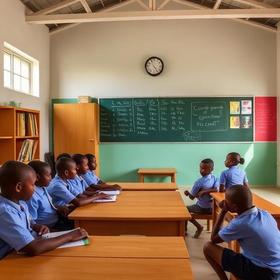
Obviously, the adjective small can be interpreted in different ways. Typically, a class size of 12-15 students will allow students plenty of interaction with their teacher. That interaction is a critical part of learning and is one of the features you must look for when considering sending your child to a private high school.
Small classes mean that your child won't just be a number. She cannot fall through the cracks. She will not be able to hide in a small class. Some teens prefer to sit on the edges and observe rather than participate. A small class draws students into discussions and activities.
From a teaching perspective, small classes are beneficial because the teacher can see how each student is doing. Discipline is not an issue in a private high school as a rule, so small class sizes have little impact on that aspect of classroom management. The benefit of having a small number of students in a class is that teaching and learning can occur. Since you send your child to a private school to learn, a small class size is a feature that you want.
Small classes also allow teachers to adapt lessons more easily to the needs of individual students. Whether a student needs additional support or greater academic challenges, teachers are generally better positioned to respond when class sizes remain manageable. For a closer look at this topic, read Benefits of Smaller Class Sizes in 草榴社区 Schools.
Highly Qualified Teachers
Being highly qualified means having a first degree in the subject being taught, complemented by an advanced degree. The requisite coursework should fortify a teacher's intrinsic passion for that subject specialty.
For example, a teacher teaching physics or calculus should have a respectable first degree in those subjects, preferably with honors. Adding a master's degree in those disciplines completes the package. A terminal degree is nice but not required.
In addition to the teachers' degree qualifications, look for plenty of experience teaching the subjects. Teaching is all about inspiring young people. If a teacher is passionate about her subject and can teach it enthusiastically and effectively, then your child will benefit.
Unlike public school teachers, private school teachers are not unionized. As a result, if a teacher is ineffective or, worse, incompetent, the school will not renew its contract. There will be no waiting for endless hearings and long, drawn-out appeals processes.
Today's strongest private schools also invest heavily in faculty development. Teachers frequently participate in professional training, technology integration programs, curriculum development initiatives, and continuing education opportunities. These efforts help ensure that classroom instruction remains current and engaging.
Organizations such as the regularly highlight the importance of ongoing professional growth for educators. If you are evaluating faculty quality, review teacher biographies carefully and ask admissions staff about professional development opportunities available to faculty members.
A Sense of Community
A sense of community in a private high school is something that you feel and experience. A school either has it, or it does not.
草榴社区 school administrators and faculty usually prioritize this because the community teaches students many life lessons. Most private schools try to produce graduates who are aware of the world around them. Even more importantly, they are taught to respect the rights and opinions of others.
The community doesn't mean that its members become faceless, uniform robots who all act and think the same. In fact, quite the opposite is true. 草榴社区 school communities encourage individuality and uniqueness. They also respect those same attributes and qualities in their various members.
A concerned, vibrant community is particularly important in a boarding school. When you are at school 24/7 for weeks on end, you begin to value the school's community, which is your family.
When you visit a campus, pay attention to how students interact with one another and with faculty members. Those interactions often reveal far more about a school's culture than any brochure or website ever could.
Families comparing several schools may also benefit from using a Checklist For Comparing Schools to organize their observations and impressions during campus visits.
Extensive Sports Programs
For that matter, sports and arts programs are frequently considered extras in public schools. The minute a district has budgetary problems, the extras get cut.
草榴社区 schools, on the other hand, take the view that sports and arts programs provide balance to the learning and maturation processes taking place in young people during high school.
That's why you will notice that most high schools set aside large amounts of time, usually an entire afternoon when the whole student body suits up and gets out on the field for some serious exercise and athletic activity. Yes, you can play varsity sports if that is your inclination, but most schools offer a wide range of sports so that everybody can participate.
As you will quickly discover when you visit schools on your shortlist, sports programs are integral to the school's life and purpose.
Teachers are involved in the sports program, too. They won't be seen leaving campus while the students head off to the field house. Faculty involvement allows your child to see his teachers in a quite different situation from the usual classroom setting.
Leading schools such as continue to emphasize the connection between athletics, leadership development, teamwork, and personal growth.
Many independent schools view athletic participation as an extension of the classroom experience. For example, has long emphasized the role of athletics in developing resilience, discipline, and collaboration among students.
Extracurricular Activities
Extracurricular activities in public schools survive at the whim of budgets and teachers. This is not the case in private schools.
Extracurriculars, as they are often called, are part of the balanced approach to learning and maturation, which most private schools feel is a critical part of the mission.
Unlike in public schools, private school teachers must advise or direct an extracurricular activity as one of their duties. That allows your child to see her teacher in a different role than just as her math teacher, for example. The math teacher becomes a cool person who loves hiking just as much as your child does.
Student newspapers, robotics clubs, debate teams, community service organizations, performing arts groups, entrepreneurship programs, and academic competitions all help students develop skills that extend well beyond the classroom.
Schools such as continue to invest heavily in extracurricular opportunities that complement classroom learning and encourage students to explore new interests.
As you visit schools, look for these features of each school's program. Most private high schools will offer these attributes. They are the main reasons you will send your child to a private school.
Conclusion
Choosing the right private school for your child takes time. The process has many parts to it. Don't try to do it all at once. Take your time. Think about what you see and have seen. Never forget that you know what is best for your child.
As you narrow your choices, focus on the characteristics that truly influence a student's educational experience. Small classes, highly qualified teachers, a strong sense of community, extensive athletic opportunities, and meaningful extracurricular activities remain among the most important indicators of a quality private school.
While every school is different, these five features provide a useful framework for evaluating your options. By concentrating on these fundamentals and conducting thorough research, you will be well positioned to find a school that matches your child's needs, interests, and long-term goals.
Families seeking additional guidance during the school search process may also benefit from reading Evaluating and Choosing a 草榴社区 School. For broader private school enrollment and educational trend data, the remains one of the most reliable sources available.